Skip to content
 
True Wealth Moves
  • Home
  • Wealth Blog
  • Resources
  • SEO Writing
  • Contact
  • About Us
Join Now
True Wealth Moves
  • AI Job Disruption Money Plan
    Wealth Psychology | Mindset & Motivation | Wealth Insights

    AI Job Disruption Money Plan: How to Protect Your Income Without Panic in 2026

    ByTrue Wealth Moves Team August 5, 2026July 21, 2026

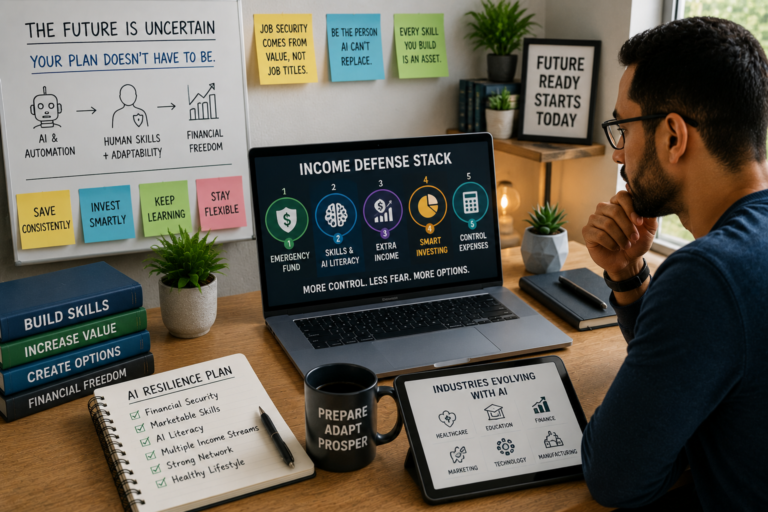
    Artificial intelligence has created one of the biggest workplace fears of the decade. People are asking: “Will AI replace my job?” “Should I learn coding?” “Should I start a side hustle?” “Am I already behind?” “Do I need to completely change careers?” The fear is understandable. Technology has always changed the way people work, but…
    Read More AI Job Disruption Money Plan: How to Protect Your Income Without Panic in 2026Continue

  • Slow FIRE Strategy
    Mindset & Motivation | Money Moves | Wealth Insights

    Slow FIRE Strategy: How to Build Financial Freedom Without Hating Your Life

    ByTrue Wealth Moves Team August 3, 2026July 21, 2026

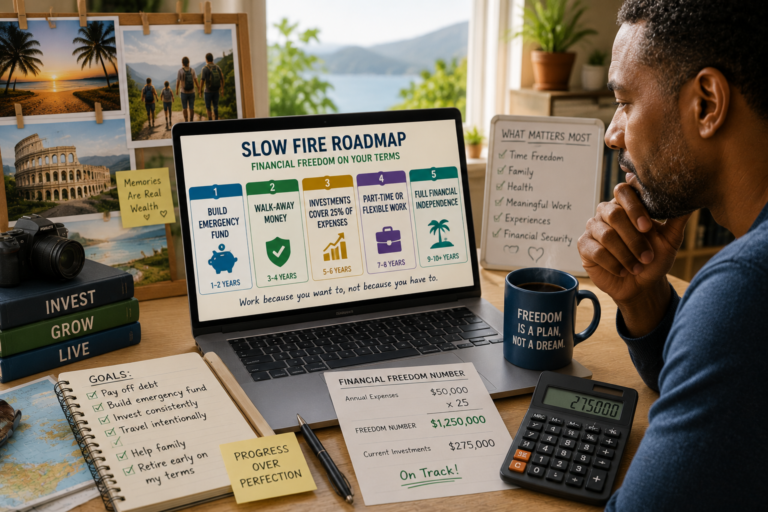
    The traditional FIRE movement can sound like a financial emergency drill. Save half your income. Stop eating out. Move somewhere cheaper. Work constantly. Invest everything. Retire before 40. For some people, that approach works. For many others, it turns financial freedom into another form of pressure. They become so focused on escaping work tomorrow that…

    Read More Slow FIRE Strategy: How to Build Financial Freedom Without Hating Your LifeContinue

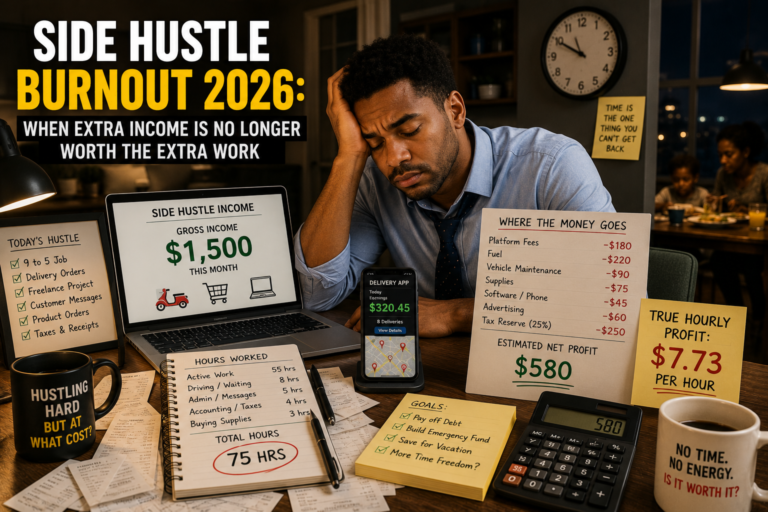
  • Side Hustle Burnout 2026
    Mindset & Motivation | Money Moves | Wealth Insights | Wealth Psychology

    Side Hustle Burnout 2026: When Extra Income Is No Longer Worth the Extra Work

    ByTrue Wealth Moves Team August 1, 2026July 21, 2026

    Side hustles are supposed to create freedom. They are supposed to help you: But many people discover a different reality. They finish their regular workday, eat quickly, open another laptop, begin a delivery shift, answer customer messages, edit content, package orders or drive across town for another job. The extra income arrives. So do the…

    Read More Side Hustle Burnout 2026: When Extra Income Is No Longer Worth the Extra WorkContinue

  • High-Yield Savings Account Fine Print
    Wealth Psychology | Mindset & Motivation | Money Moves

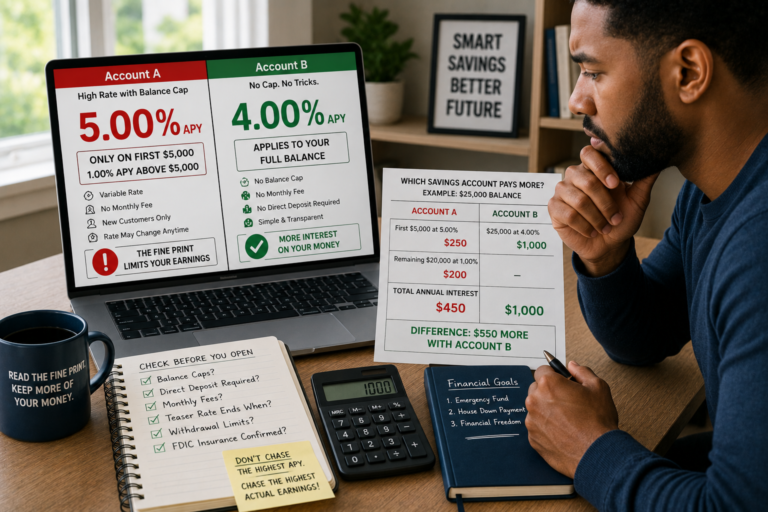
    High-Yield Savings Account Fine Print: Why the Highest APY May Not Pay You the Most

    ByTrue Wealth Moves Team July 31, 2026July 21, 2026

    A high-yield savings account should be one of the simplest financial products you own. You deposit money. The bank pays interest. Your savings grows. But the account with the highest advertised annual percentage yield is not always the account that puts the most money in your pocket. That is because the headline rate may come…

    Read More High-Yield Savings Account Fine Print: Why the Highest APY May Not Pay You the MostContinue

  • Subscription Banking 2026
    Mindset & Motivation | Money Moves | Wealth Insights

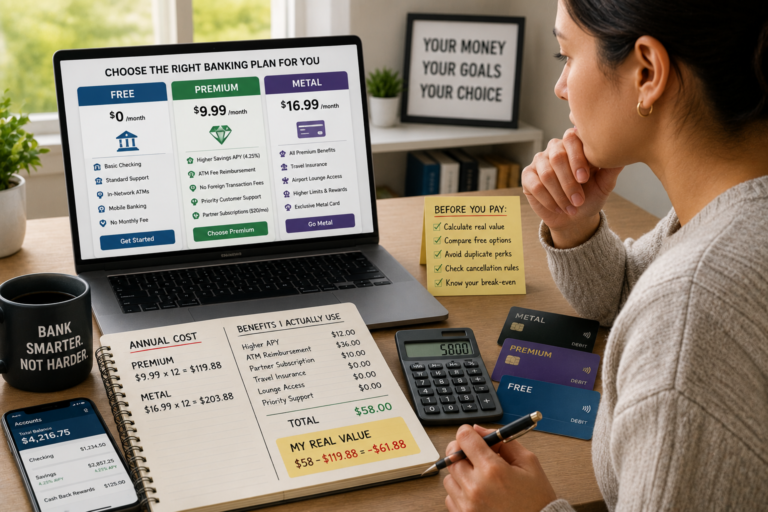
    Subscription Banking 2026: When Paid Bank Accounts Are Worth It—and When They’re a Money Leak

    ByTrue Wealth Moves Team July 29, 2026July 21, 2026

    You probably already pay monthly subscriptions for entertainment, music, cloud storage, food delivery and software. Now financial companies increasingly want banking added to that list. Instead of offering only a basic checking account, some banks and financial apps are building tiered memberships that combine: The offer can sound powerful. Pay $10 or $17 each month…

    Read More Subscription Banking 2026: When Paid Bank Accounts Are Worth It—and When They’re a Money LeakContinue

  • Credit Card Welcome Bonus Trap
    Mindset & Motivation | Money Moves | Smart Investing | Wealth Psychology

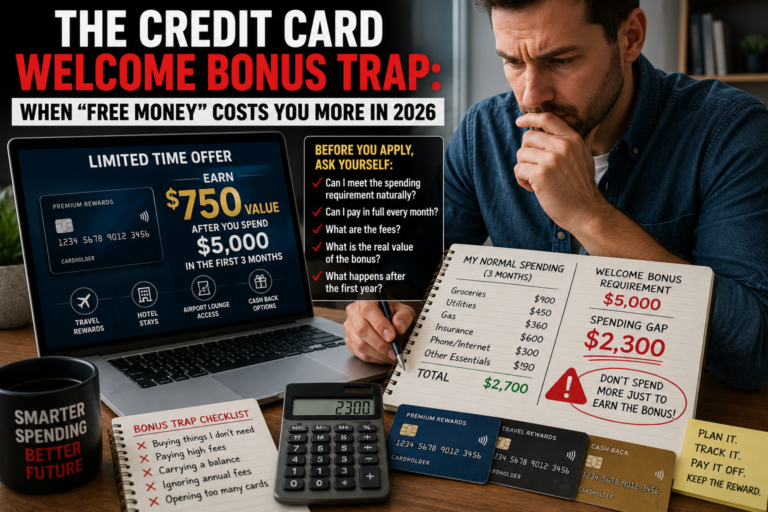
    Credit Card Welcome Bonus Trap: When “Free Money” Costs You More in 2026

    ByTrue Wealth Moves Team July 27, 2026July 21, 2026

    Credit-card companies know exactly how to get your attention. They show you: The offer can feel like free money. But the reward usually comes with a condition: Spend a specific amount within a limited period. That spending requirement is where the credit card welcome bonus trap begins. A bonus may require you to spend: When that spending…

    Read More Credit Card Welcome Bonus Trap: When “Free Money” Costs You More in 2026Continue

  • Airline Miles Strategy 2026
    Mindset & Motivation | Money Moves | Wealth Psychology

    Airline Miles Strategy 2026: How to Use Your Points Before Fees and Devaluations Eat Them

    ByTrue Wealth Moves Team July 26, 2026July 21, 2026

    Americans are sitting on a massive pile of airline miles. The problem is that many of those miles are not being used strategically. Some travelers save points for years while award prices rise. Others use 40,000 miles for a flight that costs only $300, pay expensive annual fees for travel cards they barely use, or…

    Read More Airline Miles Strategy 2026: How to Use Your Points Before Fees and Devaluations Eat ThemContinue

  • Verizon New Plans 2026
    Mindset & Motivation | Wealth Psychology

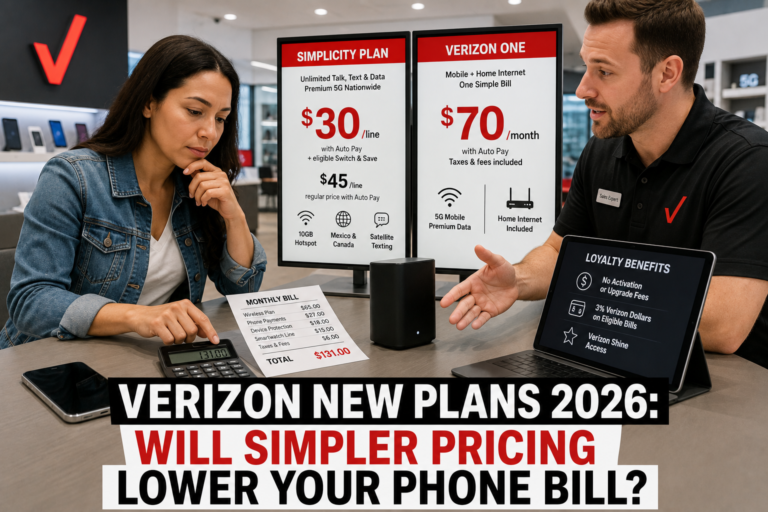
    Verizon New Plans 2026: Will Simpler Pricing Actually Lower Your Phone Bill?

    ByTrue Wealth Moves Team July 24, 2026July 21, 2026

    Verizon says it is making wireless pricing simpler. That sounds good. But in the wireless industry, “simple” does not always mean “cheap.” A lower advertised monthly price can become much more expensive after you add Auto Pay requirements, taxes, phone financing, insurance, streaming perks, international features and extra connected devices. That is why the Verizon new…

    Read More Verizon New Plans 2026: Will Simpler Pricing Actually Lower Your Phone Bill?Continue

  • Samsung Galaxy Card vs Apple Card
    Mindset & Motivation | Money Moves | Wealth Insights

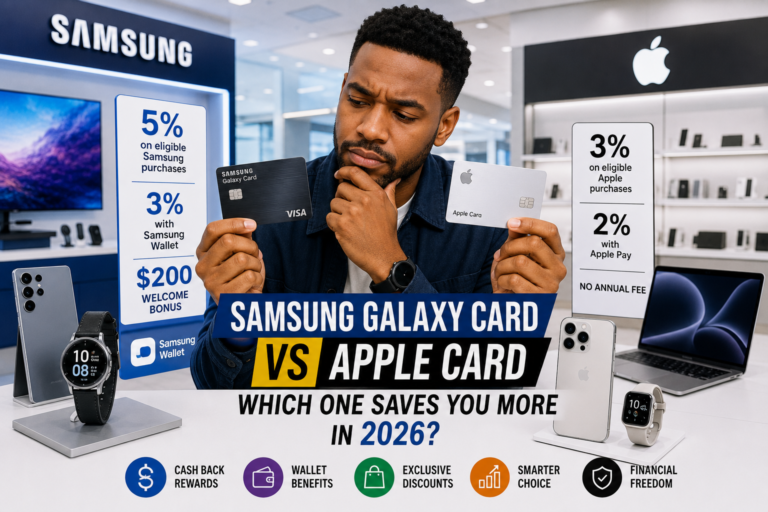
    Samsung Galaxy Card vs Apple Card: Which One Actually Saves You More in 2026?

    ByTrue Wealth Moves Team July 21, 2026July 21, 2026

    Credit cards connected to technology brands are designed to feel like natural extensions of the phones, watches, apps and devices you already use. That convenience can be valuable. It can also make brand loyalty more expensive than you realize. Samsung has introduced its first U.S. consumer credit card, creating a new comparison for millions of…

    Read More Samsung Galaxy Card vs Apple Card: Which One Actually Saves You More in 2026?Continue

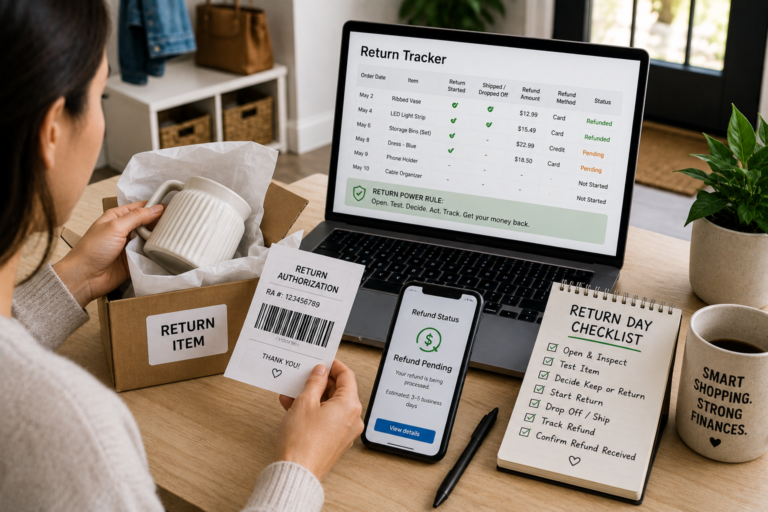
  • Most people don’t lose money online because the item was expensive. They lose money because: - the return never happened, - the refund was delayed and forgotten, - the credit got spent like “free money,” - or the return window closed while the item sat in a corner. That’s why this post is called Return Policy Power. Because return policies aren’t just “customer service.” They are a financial tool. If you use returns correctly, you protect your budget. If you use returns poorly (or not at all), “cheap shopping” becomes expensive shopping. This post is your True Wealth Moves Return Policy Power playbook for Temu and Amazon: - how to stop losing money to missed return windows - the real reasons refunds disappear (and how to track them) - how to decide “return vs keep” without emotional bias - how to avoid the most common return traps (credits, partial refunds, and return fatigue) - a simple weekly routine that prevents wasted money - and a table you can screenshot that tells you what to do at every stage No drama. Just a system. ## The hidden truth: returns are part of the price When you buy online, you are buying two things: 1) the product 2) the return risk So the real cost of an item includes: - time to evaluate it - time to return it if wrong - and your ability to actually follow through This is why Return Policy Power matters most for “cheap shopping” platforms: Because small purchases stack, and small returns get ignored. Ignored returns turn into permanent overspending. ## The 3 categories of return losses (how people actually lose money) ### Loss type 1: “I meant to return it” The item sits unopened. The return window closes. Money is gone. ### Loss type 2: “I returned it but didn’t track it” Refund is pending. You forget. You assume it’s done. Then you never confirm the money landed. ### Loss type 3: “I got store credit and spent it wrong” Credits feel like bonus money. So you buy extra stuff. Now you spent more than you intended. Return Policy Power is how you stop all three. ## The #1 Return Policy Power rule: 48 hours If you do nothing else, do this: Within 48 hours of delivery: - open the package - test the item - decide keep vs return Why 48 hours? Because after that, life gets busy. Busy turns into “later.” Later turns into “never.” This single habit prevents most return losses. ## Your return workflow: Open → Test → Decide → Act → Track Return Policy Power is a workflow, not a feeling. ### Step 1: Open No unopened boxes sitting around. ### Step 2: Test If it’s electronic, turn it on. If it’s clothing, try it on. If it’s a tool, use it quickly. ### Step 3: Decide Don’t keep “maybe.” Maybe becomes clutter. ### Step 4: Act Start the return immediately. ### Step 5: Track A return isn’t real until the refund is confirmed. ## Amazon returns: why people still lose money Amazon is “easy,” but that’s exactly why people get lazy. Common Amazon return losses: - multiple orders and scattered returns - return started but item not dropped off - refund issued as gift card and forgotten - “replacement order” confusion Return Policy Power means you treat returns like money, not like chores. ## Temu returns and credits: the common trap Temu is designed to feel like “small money.” So people treat it casually. Temu also has policies around refunds and price adjustments, and refunds can take time depending on payment methods and banks. Credits can feel faster, which makes it easy to overspend. True Wealth Moves rule: Credits are your money in a different form. If you accept credits, reduce your next budget by the same amount. ## The “Return Day” system (how to never lose money again) Pick one day per week. Example: Sunday evening. That’s Return Day: - review all deliveries from the week - start any returns - drop off returns (or schedule pickup) within 24–48 hours - update your refund tracker If you do this weekly, your refund loss rate drops close to zero. ## The Return Tracker (simple but powerful) Use a note or spreadsheet: - Date delivered - Item - Return started? (Y/N) - Drop-off date - Refund amount - Refund method (card vs store credit) - Status (pending/received) Return Policy Power is tracking until completion. ## The table: Return Policy Power checklist Alt text for this table: return policy power checklist table showing the steps from delivery to refund confirmation to prevent missed refunds | Stage | What you do | Deadline | Why it matters | |---|---|---|---| | Delivery day | Open + inspect | Same day | Stops unopened box regret | | Within 48 hours | Test + decide | 2 days | Prevents “later” returns | | Return initiation | Start return | ASAP | Locks return into the system | | Drop-off/pickup | Ship/return item | Within 24–48 hrs | Prevents unfinished returns | | Refund tracking | Check refund status | Weekly | Stops “missing refund” losses | | Credit discipline | Reduce next order budget | Immediate | Prevents overspending credits | Screenshot this and you’ll save money every month. ## “Return vs Keep” decision rule (stop emotional keeping) Ask: Would I buy this again today at this same price? If no → return it. If you’re keeping it because returning feels annoying, that’s not a reason. That’s return fatigue. Return fatigue is expensive. ## Refund discipline: don’t count money until it lands A return isn’t “done” when you drop it off. It’s done when the refund is received. True Wealth Moves rule: Refunds don’t count until they’re confirmed in your bank/app. This prevents the “I think they refunded me?” problem. ## The 5 return traps (avoid these) 1) Waiting too long 2) Not tracking refunds 3) Credits treated as bonus money 4) Returning too many small items (buy less instead) 5) Keeping items out of guilt (“I already bought it”) Return Policy Power means buying fewer items in the first place, so you don’t create return chaos. ## How to shop to reduce returns (save time + money) Return Policy Power isn’t only about returns. It’s also about preventing bad purchases. Before buying: - confirm sizes/specs - read key details - avoid “too good to be true” items - buy one version first before buying multiples Less returns = less fatigue = more savings. ## One evergreen external link (exactly one) For a stable, consumer-authority guide on online shopping safety (which includes avoiding deceptive tactics that lead to bad purchases), use: https://consumer.ftc.gov/articles/how-shop-safely-online ## Two True Wealth Moves internal links (exactly two) https://truewealthmoves.com/wealth-blog/ https://truewealthmoves.com/resources/ ## Final truth Return Policy Power is wealth protection. If you: - open and test within 48 hours - run a weekly Return Day - track refunds until confirmed - treat credits as your money (and reduce next budget) - and stop keeping “maybe” items …cheap shopping stays cheap. And you stop losing money to forgotten returns.
    Mindset & Motivation | Money Moves | Smart Investing

    Return Policy Power: How to Use Returns So “Cheap Shopping” Doesn’t Become Expensive (Temu + Amazon)

    ByTrue Wealth Moves Team June 26, 2026June 8, 2026

    Most people don’t lose money online because the item was expensive. They lose money because: That’s why this post is called Return Policy Power. Because return policies aren’t just “customer service.”They are a financial tool. If you use returns correctly, you protect your budget.If you use returns poorly (or not at all), “cheap shopping” becomes…

    Read More Return Policy Power: How to Use Returns So “Cheap Shopping” Doesn’t Become Expensive (Temu + Amazon)Continue

Page navigation

Previous PagePrevious 1 2 3 4 5 … 16 Next PageNext
  • Home
  • Wealth Blog
  • Resources
  • SEO Writing
  • Contact
  • About Us
Facebook FacebookInstagram InstagramTikTok TikTokYouTube YouTube
© 2025 True Wealth Moves  |  About  |  Privacy Policy  |  Terms of Use  |  Contact
  • Home
  • Wealth Blog
  • Resources
  • SEO Writing
  • Contact
  • About Us
Search