Consumer Sentiment 2026: Why the Economy Looks Strong but Your Budget Feels Broken
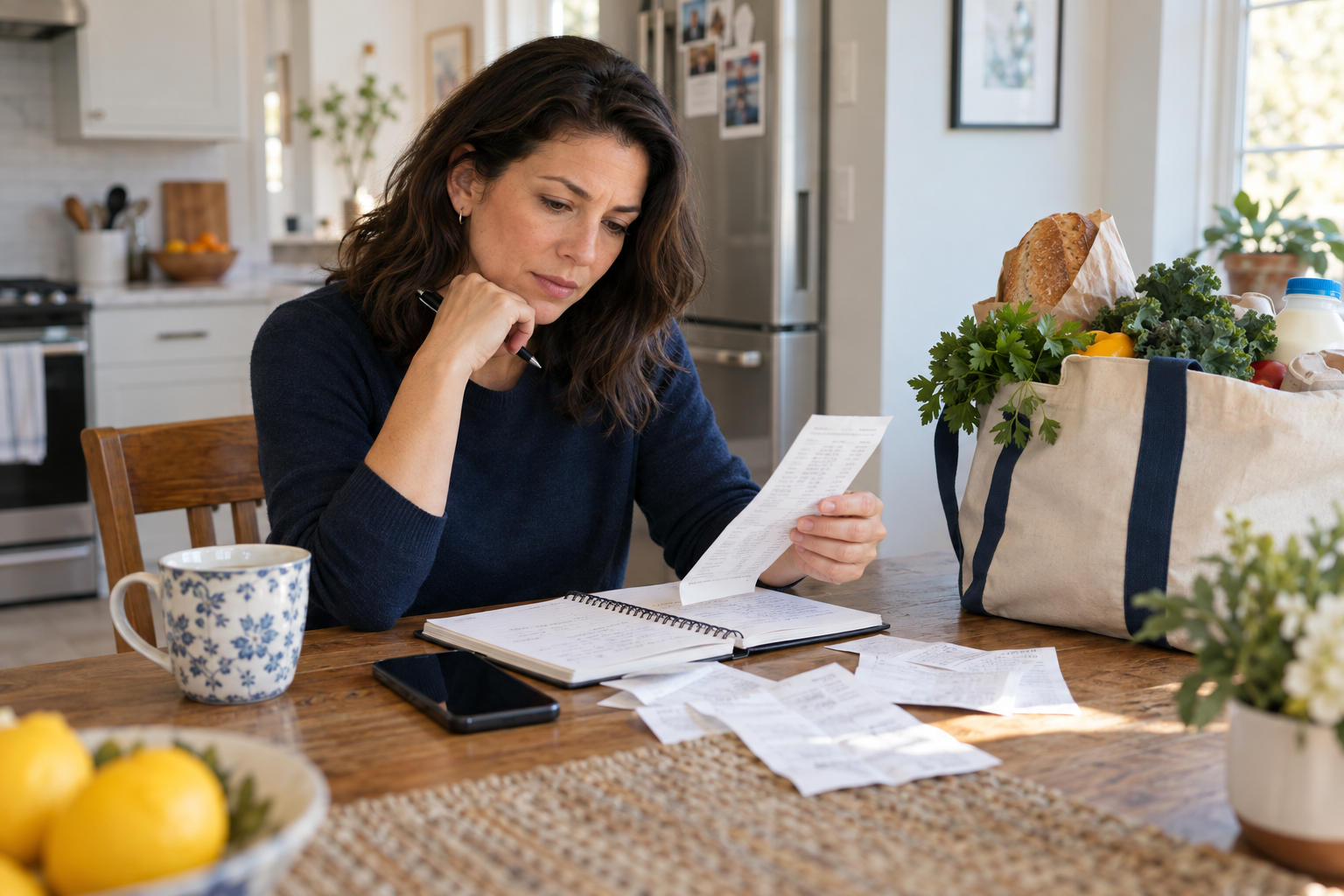
You hear that consumers are spending.
Businesses are investing. Economic activity continues. Somewhere, someone is explaining why the numbers look encouraging.
Then you open your banking app.
Your paycheck arrived. Your bills cleared. And the amount left over feels smaller than it should.
That disconnect is central to the consumer sentiment 2026 story.
An economy can expand while individual households struggle. Spending can increase while financial confidence falls. A retirement account can grow while paying this month’s bills becomes harder.
Those experiences do not cancel each other out.
They measure different things.
Understanding the difference can help you make better decisions—and stop using national headlines as the only scorecard for your financial progress.
Consumer Sentiment 2026: What the Latest Survey Shows
The University of Michigan’s preliminary September survey reported a consumer sentiment index of 47.8, down from 51.7 in August.
That represents a 7.5% monthly decline.
Expectations weakened more sharply than assessments of current conditions:
| Survey measure | August 2026 | Preliminary September 2026 |
|---|---|---|
| Consumer sentiment | 51.7 | 47.8 |
| Current economic conditions | 51.9 | 50.9 |
| Consumer expectations | 51.5 | 45.8 |
Year-ahead inflation expectations rose from 4.0% to 4.6%.
These are consumers’ expectations, not a measurement of actual inflation or a guaranteed forecast.
The September results remain preliminary. The final release is scheduled for September 25 at 10 a.m. Eastern.
The figures suggest that concerns about what comes next are an important part of the current decline in confidence.
Feeling Worse Does Not Mean Every Economic Measure Is Wrong
Economic statistics answer particular questions.
GDP measures production. Employment reports measure aspects of the labor market. Retail-sales reports measure spending in covered categories. Consumer surveys ask people about their finances and expectations.
Your bank balance answers another question:
How much money is available after your own commitments?
No single measure captures everything.
Suppose a business invests in new equipment while your landlord raises the rent.
The investment can contribute to economic activity. The rent increase can reduce your financial comfort.
Both can happen in the same economy.
The problem begins when a positive national number is treated as proof that every household should feel secure.
Seven Reasons Your Budget Can Feel Worse
1. Slower inflation does not reverse earlier increases
This distinction explains a great deal of frustration.
Imagine a basket of regular purchases costs $100.
Prices rise 8%, bringing the cost to $108.
The following year, inflation slows to 3%. The basket now costs $111.24.
Inflation slowed substantially.
Your purchases still became more expensive.
| Period | Price increase | Cost of the same basket |
|---|---|---|
| Starting point | — | $100.00 |
| Following year | 8% | $108.00 |
| Next year | 3% | $111.24 |
Illustrative example, not historical inflation data.
When people say they want inflation relief, they often mean they want prices to feel affordable again.
Slower price growth helps, but it does not automatically restore the old relationship between income and expenses.
2. Your essential expenses may rise faster than your income
A national inflation measure reflects a broad basket.
Your household has its own spending pattern.
A renter with childcare expenses can experience different pressure from a retiree with a paid-off home. A long-distance commuter can be more exposed to fuel prices than someone working nearby.
That does not make the national measure useless.
It means your budget needs its own review.
Compare recurring expenses with the same period a year earlier, adjusting for changes in what you bought.
A larger bill caused by more usage is different from a higher price for the same amount.
3. A raise can disappear before it creates breathing room
Suppose monthly take-home income increases from $5,000 to $5,200.
That is an additional $200.
But housing rises $100, insurance $45, groceries $40, and transportation $35.
The additional expenses total $220.
You earn more, yet have $20 less available.
| Monthly change | Amount |
|---|---|
| Additional take-home income | +$200 |
| Higher housing cost | -$100 |
| Higher insurance cost | -$45 |
| Higher grocery cost | -$40 |
| Higher transportation cost | -$35 |
| Change in available money | -$20 |
Hypothetical household example.
Your raise was real.
So was the loss of financial flexibility.
TWM’s inflation versus wage growth guide explains how to compare income growth with purchasing power.
4. Interest consumes money without improving your lifestyle
Interest charges can make a budget feel particularly discouraging.
You spend more but receive no additional groceries, housing space, or transportation.
A revolving balance can absorb money that would otherwise support savings or debt reduction.
That is why two households with similar incomes and living costs can feel very different financially.
One pays its card balance in full. The other carries expensive debt from earlier shortfalls.
When reviewing your budget, separate interest from new purchases. Otherwise, the cost of past spending can hide inside today’s monthly payment.
5. Financial gains may be inaccessible
A rising retirement account can improve long-term wealth without making rent easier to pay.
Home equity can increase while monthly ownership costs rise.
Those gains matter. They simply serve a different purpose from available cash.
A household can therefore be wealthier on paper and still feel financially constrained.
Track both.
Net worth measures assets minus liabilities. Cash flow measures money coming in and going out over a period.
Neither replaces the other.
6. Keeping a job is different from feeling secure
You may remain employed while worrying about how easily you could replace your income.
Hiring freezes, reduced overtime, smaller bonuses, or fewer opportunities can change your outlook before a layoff occurs.
That uncertainty can make ordinary purchases feel risky.
Assess your own situation using observable information: income variability, industry conditions, transferable skills, and available reserves.
Avoid assuming that national employment figures settle the question of your personal job security.
7. Goals can move farther away
You may be managing current bills while struggling to reach the next stage.
A home down payment. Childcare. A reliable vehicle. Retirement saving. Helping a parent.
If the cost of a goal increases faster than the amount you can save, progress feels slower even when your account balance rises.
Separate the amount saved from the percentage of the goal funded.
Saving an additional $2,000 feels different if the target increased by $10,000 during the same period.
Why People Keep Spending While Feeling Worried
Spending is not a direct measurement of confidence.
People still need food, transportation, clothing, and household supplies when they feel uncertain.
Some replace broken items. Others bring purchases forward because they expect higher prices. Some spend from income, others from savings or credit.
Aggregate spending also combines households with very different resources.
Strong spending by one group can coexist with strain in another.
You cannot determine how purchases were financed merely by observing that dollars changed hands.
For your own finances, ask a more revealing question:
Is my spending supported by sustainable income, or am I gradually using up financial reserves?
Build Your Own Household Scorecard
You do not need to reproduce an economic survey.
Track a few measures that connect directly to your stability.
| Measure | What to record | Why it matters |
|---|---|---|
| Monthly cash flow | Income minus total spending | Shows whether the budget is sustainable |
| Essential expenses | Housing, food, utilities, transport, and required payments | Defines the cost of maintaining basic stability |
| Accessible reserves | Cash available for unexpected needs | Measures immediate flexibility |
| Expensive debt | Balance, APR, and monthly interest | Shows how past borrowing affects current income |
| Goal progress | Savings compared with the amount needed | Measures whether you are gaining ground |
Review trends across several months.
One unusually expensive month does not necessarily indicate a lasting problem. A recurring shortfall deserves attention even if no individual month looks dramatic.
Measure Your Spending Gap Carefully
Compare take-home income and spending across similar periods.
Suppose last year’s monthly income was $6,000 and spending was $5,400.
You had $600 available.
This year, income reaches $6,180 while spending rises to $5,800.
You now have $380 available.
The budget remains positive, but your monthly flexibility has fallen $220.
That may explain your discomfort more clearly than a national headline.
Next, identify why spending increased.
Separate:
- Higher prices for comparable purchases.
- Changes in consumption.
- New obligations.
- Irregular expenses.
- Interest and fees.
Different causes require different responses.
Find the Largest Fixable Cost First
A frustrating budget can lead to dozens of small restrictions that are difficult to maintain.
Start with costs that offer meaningful savings without undermining essential needs.
Review insurance quotes, service plans, subscriptions, fees, and financing.
A $60 monthly reduction in one recurring bill produces $720 over a year.
That does not solve every household problem, but it creates a measurable improvement.
Compare the full terms before switching. A cheaper policy with inadequate coverage or a service plan with costly restrictions may not be a better deal.
Choose changes you can sustain.
Give Irregular Expenses a Monthly Place
Some budgets look healthy because they omit predictable expenses that do not arrive monthly.
Examples include annual premiums, school costs, maintenance, memberships, and seasonal travel.
Suppose those expenses total $3,600 annually.
Setting aside $300 monthly gives them a place in the budget.
Without that allowance, they may repeatedly look like emergencies.
Review the previous twelve months of statements to identify the pattern.
Keep predictable irregular expenses separate from genuinely unexpected events. Both require preparation, but the planning methods differ.
Stop Using Credit to Disguise a Recurring Shortfall
A card can make a budget appear balanced because every bill gets paid.
The balance tells a different story.
If your normal expenses exceed income by $150 monthly, twelve months adds $1,800 before interest.
The first task is to address the recurring gap.
Repayment works better when new borrowing is no longer replacing the principal you pay down.
If minimum payments have become difficult, contact the lender promptly about available arrangements and understand their terms.
The earlier you identify the pattern, the more options you may have.
Build Financial Breathing Room in Stages
A large emergency-fund target can feel impossible when you are already stretched.
Start with an achievable milestone tied to your circumstances.
That could be enough for a common repair, a deductible, or part of one month’s essential expenses.
Then build gradually.
The purpose is to reduce the chance that every disruption becomes new debt.
TWM’s first $10,000 system offers a step-by-step approach to developing that savings habit.
Progress does not require an impressive transfer every payday.
It requires a process your income can support.
Use Two Budgets to Reduce Uncertainty
Create a normal budget and a temporary reduced-spending budget.
The second answers a practical question:
What could change if income dropped?
| Category | Normal monthly amount | Temporary reduced amount |
|---|---|---|
| Dining and takeout | $300 | $100 |
| Entertainment | $120 | $40 |
| Optional shopping | $200 | $50 |
| Travel saving | $150 | $0 |
| Subscriptions | $80 | $40 |
| Total | $850 | $230 |
Illustrative expenses. Actual flexibility differs by household.
This example identifies $620 of temporary monthly room.
You do not have to make every reduction immediately.
Knowing which changes are available can reduce uncertainty and help you respond faster if circumstances change.
Do Not Let a Survey Make Your Investment Decisions
Weak consumer sentiment is useful economic information.
It is not a personalized instruction to sell investments.
Markets consider expectations about future profits, rates, and growth. They can move differently from household confidence.
Before changing your portfolio, review the purpose of the money, time horizon, diversification, and cash needs.
If your budget has become fragile, address that directly. Selling long-term assets in response to a broad mood indicator may not solve the underlying issue.
A household plan should distinguish cash needed soon from investments intended for later goals.
Your 30-Day Consumer Sentiment 2026 Reset
| Timing | Action | Useful outcome |
|---|---|---|
| Week 1 | Review three months of income and spending | Identify the recurring pattern |
| Week 2 | Separate price changes from new spending and debt costs | Find the real source of pressure |
| Week 3 | Make one meaningful adjustment and fund an irregular expense | Create measurable breathing room |
| Week 4 | Set a savings transfer and prepare a reduced-spending budget | Build a repeatable response |
Choose one indicator to review each month.
For many households, the most useful is simply the amount remaining after all expenses—including the irregular ones—have been accounted for.
If that number improves, your financial position may be strengthening even when the news remains uncomfortable.
Your Financial Experience Deserves Its Own Evidence
The consumer sentiment 2026 figures capture a real deterioration in how surveyed households view the economy.
They do not describe every family equally.
Some households are improving. Others are managing higher costs with less flexibility. Many sit somewhere between stability and stress.
You do not need a recession declaration to address a shrinking surplus.
And you do not need a positive headline to recognize progress you have made.
Open your statements. Measure the gap. Identify one change that improves next month.
Your household scorecard should tell you what is happening—and give you something practical to do about it.
Looking for More Finance Topics?
Use the search box below to explore hundreds of articles on True Wealth Moves — we’ve probably already written about what you’re looking for.