
Oil Price Shock 2026: 7 Ways It Hits Your Wallet—and What to Do
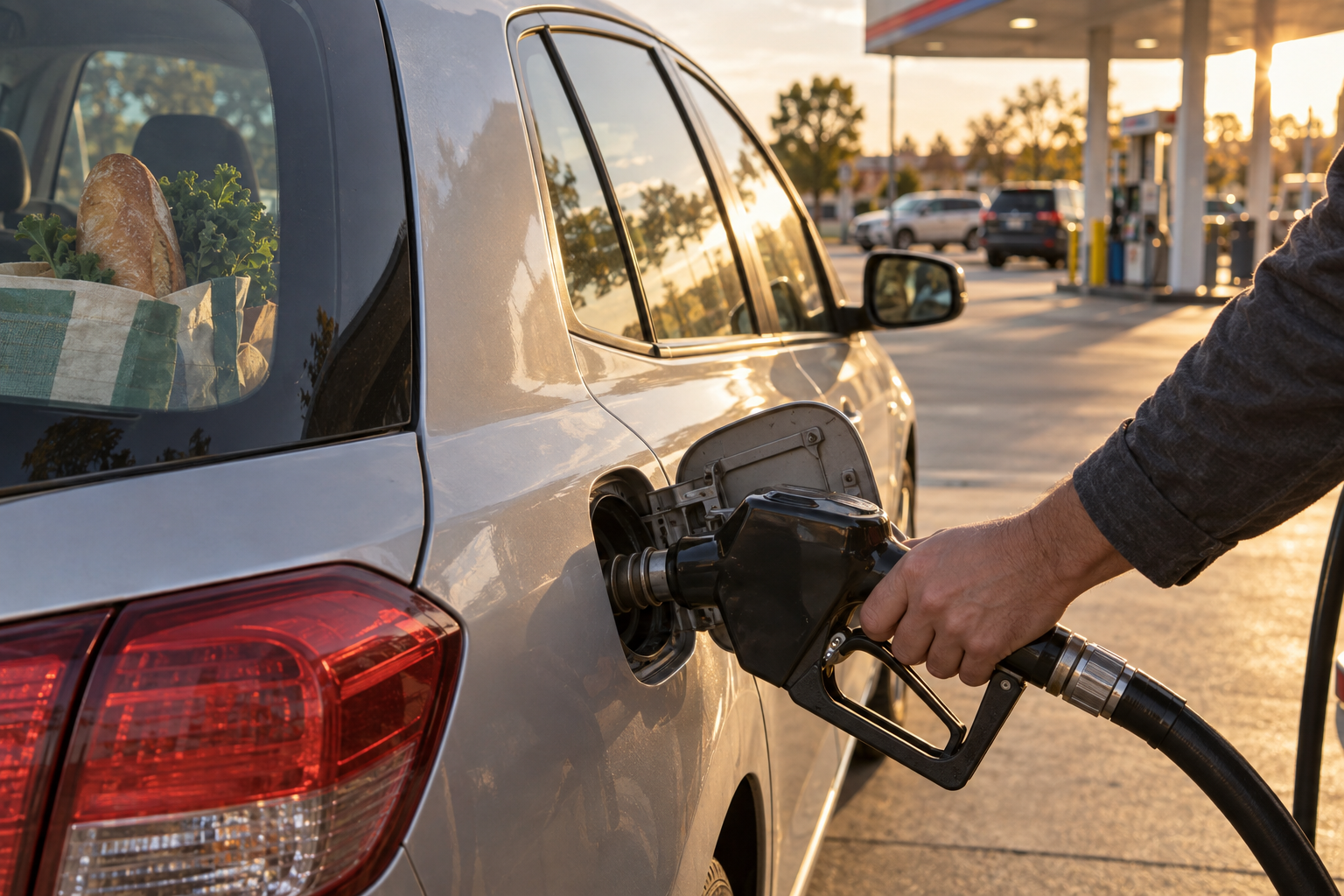
You notice it first at the gas station.
The same commute. The same vehicle. A bigger charge on your card.
Then a delivery costs more. A contractor adds a fuel surcharge. Your travel budget starts looking optimistic.
You have not necessarily changed your lifestyle.
But the cost of maintaining it can change when energy becomes more expensive.
That is why the oil price shock 2026 matters beyond the price displayed at your local pump.
Oil moves through a network of refineries, shipping routes, trucks, aircraft, factories, and businesses before its costs reach households. Some effects arrive quickly. Others appear gradually, and some businesses absorb them instead of passing them along.
Understanding that process helps you respond without assuming every price increase has the same cause.
You cannot control global oil supplies.
You can calculate your exposure, adjust the expenses that matter, and avoid turning a temporary increase into a lasting debt problem.
Oil Price Shock 2026: What Is Happening?
The September Short-Term Energy Outlook from the U.S. Energy Information Administration describes continued pressure from constrained Middle Eastern exports and declining global oil inventories.
Brent crude averaged approximately $91 per barrel in August, about $7 above July.
The agency expected some regional export constraints to persist through year-end. It also forecast U.S. distillate inventories—the category that includes diesel and heating oil—to fall below 100 million barrels in September.
Those are important signals for transportation and heating costs.
However, the outlook was completed on September 3 and released on September 9. Its price forecasts are conditional projections, not live quotes or guarantees about subsequent market developments.
For household planning, the useful lesson is that disrupted supplies can affect several expenses at once.
The exact effect depends on what you buy, where you live, and how much energy your daily life requires.
Why American Oil Production Does Not Fully Protect Your Budget
A common question is understandable:
“If America produces oil, why do events overseas affect what I pay?”
Oil and petroleum products trade across international markets.
When supplies become harder to obtain in one region, buyers can compete for alternatives elsewhere. That affects prices even when a particular shipment never enters the United States.
Refineries also differ in the crude they process and the products they produce. Getting oil out of the ground is one step; turning it into usable fuel and delivering it where needed requires additional capacity.
Domestic production provides important supply.
It does not create a separate pricing system insulated from the rest of the world.
The same global connection can work in reverse when supplies improve or demand weakens.
Seven Ways Higher Oil Costs Can Reach Your Household
1. Your commute becomes more expensive
This is usually the easiest effect to measure.
Your fuel spending depends on three things:
Miles driven ÷ miles per gallon × price per gallon.
Suppose you drive 1,200 miles monthly and average 25 miles per gallon.
You need approximately 48 gallons.
At $3.50 per gallon, that costs $168. At $4.25, it costs $204.
The difference is $36 monthly, or $432 if those conditions last a year.
That is meaningful, but it is also specific. You can budget around $36 more effectively than around a vague feeling that everything is becoming unaffordable.
2. Diesel costs can affect goods you buy
You do not need a diesel vehicle to be exposed to diesel prices.
Trucks and other equipment help move goods between farms, factories, warehouses, and stores.
When transportation costs rise, businesses may adjust prices or surcharges, accept smaller margins, or change operations.
The outcome depends on competition, contracts, and customer demand.
A 10% fuel increase does not imply a 10% increase in the price of every delivered product. Fuel represents only part of the total cost.
Watch actual invoices rather than applying a blanket inflation assumption to your entire budget.
3. Groceries face another source of cost pressure
Food prices reflect many influences, including weather, labor, processing, packaging, and retailer decisions.
Energy can contribute through farm operations and transportation.
But oil does not explain every movement in your grocery bill. Different products have different supply chains, and some agricultural inputs depend more directly on other energy markets.
The practical response is to track a small basket of items your household regularly buys.
Compare unit prices, not just package prices. A familiar price on a smaller package still changes what you receive for your money.
4. Flights and travel can become harder to budget
Jet fuel is a significant airline expense, but fares do not move mechanically with crude oil.
Routes, competition, bookings, capacity, and fuel arrangements also matter.
For travelers, the full trip budget deserves attention: airfare, driving, airport transportation, baggage, accommodation, and cancellation terms.
A cheaper flight from a distant airport may stop being cheaper after parking and ground transportation.
Compare the complete trip rather than trying to predict when one input cost will reach its lowest point.
5. Heating-oil households face direct exposure
If your home uses heating oil, changes in delivered fuel prices can directly affect heating expenses.
Consider an illustrative 150-gallon delivery.
At $4 per gallon, the fuel costs $600. At $4.75, it costs $712.50.
That is $112.50 more, before any separate fees.
Weather and consumption determine how often you need a delivery.
Review supplier terms, service charges, minimum deliveries, and any fixed-price or budget-plan conditions before choosing an arrangement.
6. Businesses may add or revise service charges
Moving companies, delivery services, landscapers, and other businesses can face higher operating costs when fuel rises.
Some may introduce a surcharge. Others may include the increase in the quoted price.
Ask whether a quote includes transportation and fuel charges, how long it remains valid, and whether additional charges can apply.
This is particularly useful for a move, a large delivery, or a project booked months ahead.
A written all-in quote makes comparisons easier.
7. Higher expenses can push you toward expensive debt
The most lasting household damage may come from how you finance the increase.
Suppose several costs rise by a combined $100 monthly. You cover the gap with a credit card while waiting for relief.
After twelve months, you have added $1,200 before interest.
If prices later ease, that balance remains.
The oil shock may be temporary. Borrowing to maintain an unchanged budget can extend its consequences.
Identify the monthly gap early, while it is still small enough to address.
Higher Oil Prices Do Not Automatically Mean Higher Electricity Bills
Energy sources are connected, but they are not interchangeable.
Most U.S. electricity generation does not come from petroleum. Natural gas, nuclear energy, coal, and renewables play much larger roles nationally.
Your electricity bill also reflects local generation, delivery costs, weather, usage, and utility pricing.
An oil-price increase alone therefore cannot tell you how much your power bill will change.
Separate your review into gasoline, heating fuel, natural gas, and electricity.
For each, check both the amount used and the price per unit.
That distinction prevents you from blaming a rate increase when the bigger cause was heavier usage—or overlooking a price increase because your consumption fell.
Calculate Your Personal Oil Price Shock 2026 Exposure
National averages provide context. Your own numbers support decisions.
Start with vehicle fuel because it is straightforward to estimate.
Monthly gasoline cost under different scenarios
| Monthly driving | Fuel economy | Gallons required | At $3.50/gallon | At $4.25/gallon | Increase |
|---|---|---|---|---|---|
| 600 miles | 30 mpg | 20 | $70 | $85 | $15 |
| 1,200 miles | 25 mpg | 48 | $168 | $204 | $36 |
| 1,800 miles | 20 mpg | 90 | $315 | $382.50 | $67.50 |
| 2,400 miles | 20 mpg | 120 | $420 | $510 | $90 |
Illustrative calculations, not current local prices. Actual fuel economy varies.
Next, add increases you have actually observed elsewhere.
Suppose fuel is up $36, your usual grocery basket costs $25 more, and recurring delivery charges rise $9.
Your measured monthly gap is $70.
Do not assume oil caused the entire increase. The point is to identify the cash-flow problem you need to solve.
Build a Small Buffer Around the Measured Gap
A buffer makes changing costs easier to absorb.
Using the hypothetical $70 monthly gap:
- One month requires $70.
- Three months require $210.
- Six months require $420.
That is a planning target, not a prediction that prices will stay elevated for six months.
You might build it gradually, reduce spending elsewhere, or combine both approaches.
Keep it accessible if you expect to use it soon.
Avoid setting such an ambitious savings target that funding the buffer itself forces you to borrow for essentials.
A workable adjustment is more valuable than an impressive number you cannot maintain.
Reduce Driving Costs Without Making Life Impractical
Many people cannot eliminate their commute.
Work schedules, childcare, disability, transit availability, and housing costs limit flexibility.
Focus on changes that fit your circumstances.
Combine compatible errands. Compare nearby fuel prices along routes you already travel. Use the fuel grade specified for your vehicle, distinguishing required premium fuel from a recommendation.
Avoid a long detour for a small discount.
For example, saving 10 cents per gallon on a 12-gallon purchase saves $1.20. An unnecessary drive can consume much of that benefit before accounting for your time.
If your household has two vehicles, using the more efficient one for longer trips may help when practical.
Measure the result over several weeks rather than assuming every small change produces a large saving.
Do Not Replace a Reliable Car Based on Gasoline Alone
Higher pump prices can make a different vehicle feel urgent.
But a purchase introduces costs beyond fuel.
Suppose a replacement would reduce gasoline spending by $100 monthly but add a $450 payment.
Your monthly cash requirement increases by $350 before changes in insurance, maintenance, registration, or charging costs.
That does not mean replacing a vehicle is always wrong.
It means the decision requires a full comparison.
Evaluate the purchase price, financing, depreciation, expected repairs, mileage, and how long you intend to keep it.
A paid-off vehicle with higher fuel consumption may still cost less overall than a newer, more efficient one.
Use realistic annual mileage rather than the driving pattern of your most expensive week.
Protect the Grocery Budget Through Better Comparisons
Start with waste and buying patterns.
A discount is useful only if your household consumes what you purchase.
Compare cost per ounce, pound, or serving. Check the freezer and pantry before shopping. Use meals that share ingredients so leftovers are easier to use.
Bulk purchases make sense when storage, shelf life, and cash flow support them.
They make less sense when you pay interest on the purchase or discard part of it.
Choose a manageable list of frequently purchased foods and record prices periodically.
That gives you evidence about your own budget without requiring an exhausting spreadsheet for every item.
TWM’s inflation versus wage growth guide explains how rising household costs can absorb a pay increase.
If You Drive for Income, Recalculate Profit Per Hour
Delivery drivers, rideshare drivers, and mobile service providers need to review business economics as well as household spending.
Revenue can remain unchanged while profit falls.
Suppose a hypothetical driving shift generates $150 over six hours.
| Item | Earlier fuel cost | Higher fuel cost |
|---|---|---|
| Revenue | $150 | $150 |
| Fuel | $25 | $35 |
| Other allocated vehicle costs | $30 | $30 |
| Amount remaining before taxes | $95 | $85 |
| Amount per hour before taxes | $15.83 | $14.17 |
Illustrative example. A complete assessment must include all relevant costs and working time.
Track unpaid miles and waiting time.
For an independent service business, review whether your pricing still covers travel. Any revised fees should be communicated clearly before customers commit.
More bookings are not automatically better if the additional work produces too little profit.
Avoid Turning Household Protection Into an Oil Trade
Buying energy shares may sound like a way to offset gasoline bills.
But an investment is an imperfect match for a near-term household expense.
An energy company’s shares respond to operating costs, debt, management decisions, taxes, and market expectations as well as commodity prices.
You could face expensive fuel and a falling investment simultaneously.
Money needed for essential bills should remain available for that purpose.
Evaluate any investment within your broader plan, including existing exposure and the possibility of losses.
A budget adjustment should not require a successful market prediction.
Your 30-Day Household Response
Use the next month to replace uncertainty with a few useful numbers.
| Timing | Action | Result |
|---|---|---|
| Days 1–3 | Review fuel receipts and driving needs | Establish actual consumption |
| Days 4–7 | Compare recurring bills and groceries | Measure the monthly spending gap |
| Week 2 | Adjust routes, purchases, or discretionary spending | Reduce the gap where practical |
| Week 3 | Review heating and travel commitments | Identify upcoming costs and contract terms |
| Week 4 | Set a buffer target and check card balances | Reduce dependence on borrowing |
For more household money planning, explore the TWM Wealth Blog.
Decide What You Will Do If Prices Change Again
Your plan should cover relief as well as further pressure.
If costs rise, identify which optional expense you would reduce before adding debt.
If costs stay elevated, review whether the temporary adjustment needs to become part of your normal budget.
If costs fall, consider directing some of the savings toward the buffer or balances built during the expensive period.
That way, lower prices create lasting progress.
The oil price shock 2026 will affect households differently. Your response should reflect your commute, heating system, income, and spending commitments.
Start with your last month of receipts.
Calculate the gap. Choose one adjustment. Give the next dollar a job before it disappears into a more expensive version of the same routine.
Looking for More Finance Topics?
Use the search box below to explore hundreds of articles on True Wealth Moves — we’ve probably already written about what you’re looking for.





