Strong Dollar 2026: Who Wins, Who Pays, and What to Do
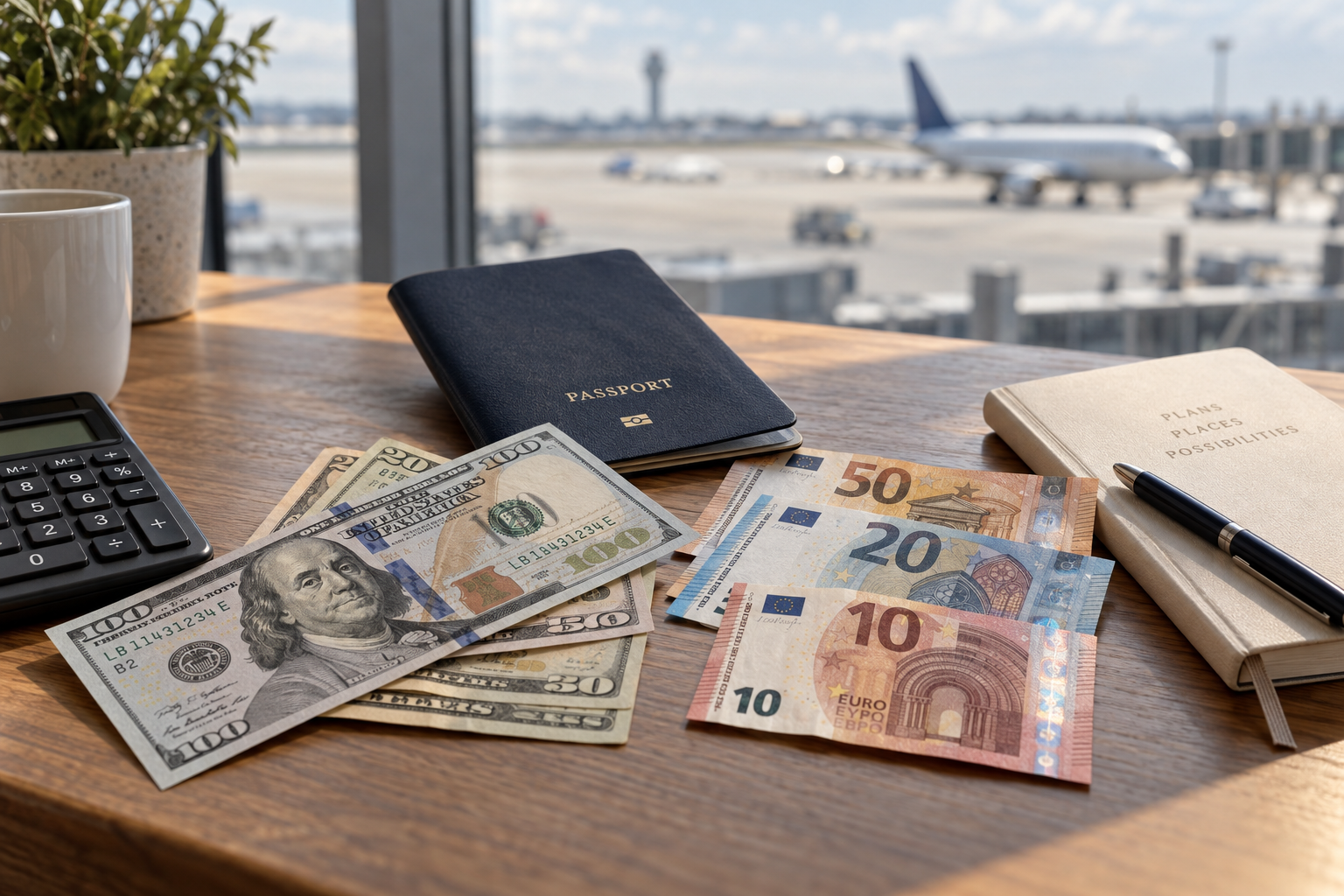
A stronger dollar sounds like good news.
Your money is stronger. It should buy more. Everyone benefits.
Then an American manufacturer reports pressure on overseas sales. A multinational company says currency movements reduced its reported revenue. A family outside the United States needs more local currency to make the same dollar-denominated payment.
Meanwhile, an American traveler discovers that a hotel abroad costs less when converted into dollars.
All those outcomes can happen together.
The strong dollar 2026 story is about purchasing power moving between people, businesses, and countries.
Whether you benefit depends on the currency you earn, the currency you spend, and the assets or obligations you hold.
You do not need to become a currency trader to understand the consequences.
You need to know where exchange rates already touch your finances.
Strong Dollar 2026: What Is Happening?
On September 23, Reuters reported that the dollar reached its strongest level in almost two months, supported by expectations of further US interest-rate increases.
That is a dated market observation, not a forecast that the dollar will keep rising.
Currency markets respond to changing expectations about interest rates, growth, inflation, and investor demand.
Those expectations can shift quickly.
For households, the useful question is not whether today’s move continues indefinitely.
It is whether a change in the exchange rate affects an upcoming expense, a source of income, or an investment you already own.
What a Stronger Dollar Actually Means
A dollar strengthens against another currency when it buys more of that currency.
Suppose one dollar initially buys €0.90.
Later, it buys €0.95.
Your $1,000 now converts into €950 instead of €900, before fees.
The dollar has strengthened against the euro in this example.
However, it may not strengthen by the same amount against every currency. A broad dollar index and your specific travel exchange rate can tell different stories.
Always check the currency pair relevant to your decision.
A simple purchasing-power example
| Dollar amount | At €0.90 per dollar | At €0.95 per dollar | Additional euros |
|---|---|---|---|
| $500 | €450 | €475 | €25 |
| $1,000 | €900 | €950 | €50 |
| $3,000 | €2,700 | €2,850 | €150 |
| $5,000 | €4,500 | €4,750 | €250 |
Hypothetical exchange rates, not current quotes. Fees and conversion spreads excluded.
The benefit becomes real only when you convert or spend at the available rate.
Who Can Benefit From a Stronger Dollar?
American travelers spending in foreign currencies
If local prices remain unchanged, a stronger dollar can reduce the dollar cost of accommodation, meals, transportation, and activities abroad.
Consider a hotel charging €200 per night.
At €0.90 per dollar, the room costs approximately $222.22.
At €0.95 per dollar, it costs approximately $210.53.
That saves about $11.70 nightly before fees.
Across seven nights, the difference is approximately $81.87.
But exchange rates are only one part of the trip budget. Higher airfares or hotel prices can offset the benefit.
Compare the total trip cost rather than assuming a stronger dollar makes every destination inexpensive.
Businesses buying foreign-currency-priced supplies
An American importer paying a fixed amount in a foreign currency may need fewer dollars when the dollar strengthens.
That can reduce costs.
However, many international transactions are priced in dollars. Contracts, tariffs, freight, and supplier decisions also affect the final bill.
The benefit therefore depends on the arrangement.
A currency movement is not a guaranteed reduction in every import invoice.
Families paying overseas expenses from dollar income
Dollar earners supporting relatives, paying tuition, or covering property expenses abroad may gain purchasing power.
The effect depends on the receiving currency and local prices.
If a family needs a fixed amount of local currency each month, fewer dollars may be required.
If the sender continues transferring the same dollar amount, the recipient may receive more local currency.
Both can improve flexibility, but neither eliminates the need to compare transfer costs.
Who Can Face Pressure?
American exporters
A US business charging dollars may become more expensive for overseas customers whose currencies weaken.
Imagine equipment priced at $10,000.
If a buyer previously needed 9,000 units of local currency to purchase it, but now needs 10,000, the buyer faces a higher local-currency cost even though the American seller changed nothing.
The seller may face weaker demand or pressure to offer a discount.
Actual outcomes depend on competition, product advantages, and contractual terms.
Businesses receiving foreign-currency revenue
A company can sell the same amount abroad and report fewer dollars when converting that revenue.
Suppose a business earns €1 million.
At $1.10 per euro, that translates into $1.1 million.
At $1.00 per euro, it translates into $1 million.
The dollar-reported amount falls even though the euro revenue is unchanged.
That is a translation effect. It does not, by itself, prove customers bought less.
Overseas borrowers with dollar obligations
A borrower earning local currency but owing dollars can face a growing burden when the local currency weakens.
The dollar payment stays the same.
The amount of local income needed to make it rises.
This can affect businesses, governments, and individuals, especially when they lack offsetting dollar revenue or protection against currency movements.
It is one reason US financial conditions can matter far beyond US borders.
The Dollar-Debt Problem in Plain Numbers
Consider a hypothetical business with a $10,000 payment due.
| Exchange rate | Local currency required |
|---|---|
| 100 local units per dollar | 1,000,000 |
| 110 local units per dollar | 1,100,000 |
| 120 local units per dollar | 1,200,000 |
Illustrative rates and payment amounts.
At 120 units per dollar, the business needs 20% more local currency than it did at 100.
Nothing changed about the dollar debt.
The exchange rate changed the burden relative to local income.
A business earning dollars might have a partial natural offset. A business earning only local currency may be more exposed.
That distinction matters more than simply knowing the country has foreign debt.
Why US Shoppers May Not See Immediate Discounts
A stronger dollar can help reduce some import costs, but retail prices do not automatically move in proportion.
Businesses may have inventory purchased at earlier rates. Suppliers may adjust their prices. Contracts may delay changes.
Retail prices also include domestic transportation, wages, rent, taxes, and margins.
A currency benefit affecting one component does not reduce every component.
Consider a hypothetical product with a $40 imported component and $60 of other costs.
Even if the imported component becomes 10% cheaper, the total modeled cost falls only $4, from $100 to $96.
The final customer price depends on the business’s pricing decision.
Do not budget for savings until you see them in actual offers.
A Stronger Dollar Does Not Erase Domestic Inflation
Exchange rates measure one currency against another.
Domestic purchasing power measures what money buys at home.
The dollar can strengthen internationally while groceries, rent, or insurance become more expensive in the United States.
Those developments are compatible.
If you are struggling with household costs, a favorable currency headline does not necessarily improve your monthly budget.
Track your own recurring expenses alongside take-home income.
TWM’s inflation versus wage growth guide explains how to assess that purchasing-power gap.
What the Strong Dollar 2026 Means for International Investments
Foreign investment returns have two parts for a US-based investor: the investment’s performance in its local currency and the currency movement against the dollar.
Suppose a foreign investment gains 8% locally.
During the same period, the foreign currency loses 10% of its dollar value.
The approximate combined return is:
1.08 × 0.90 − 1 = −2.8%.
The investment rose in its home market but lost value when measured in dollars.
Currency can change the final result
| Local investment return | Currency change against dollar | Combined dollar return |
|---|---|---|
| +8% | 0% | +8% |
| +8% | -10% | -2.8% |
| +8% | +10% | +18.8% |
Simplified examples excluding fees, taxes, and distributions.
Some funds hedge currency exposure. Others do not.
Hedging changes the risk and involves costs or return effects. It does not guarantee a better result.
Review what your fund actually does before assuming international investments all respond the same way.
Domestic Stocks Can Have International Exposure Too
A company listed in the United States may earn substantial revenue overseas.
Its suppliers, competitors, and production facilities may also be international.
That means owning a US stock does not necessarily remove currency exposure.
When reading results, distinguish reported growth from growth measured at constant exchange rates.
Constant-currency figures can help explain underlying operations, but they are supplementary measures. Shareholders still need to understand actual reported results and cash flows.
Avoid treating a currency-related earnings change as either meaningless or proof of a failing business.
Read the explanation in context.
Travelers: Compare the Full Conversion Cost
The exchange rate displayed in a market report may differ from the rate you receive.
Your transaction can include a conversion spread, card fee, ATM charge, or other cost.
Compare the final amount rather than focusing only on a “no fee” advertisement.
When offered a choice between paying in dollars and the local currency, examine the conversion terms. Merchant-provided dollar conversion can include an unfavorable rate; your own card’s fees still matter.
Before travel, check your card agreement and withdrawal costs.
A favorable market movement can be partly lost through expensive conversion.
Sending Money Abroad: Compare What Arrives
For remittances, the most useful comparison is often the amount the recipient receives for the same total dollar cost.
Suppose you have a $500 budget.
| Provider | Amount converted after fee | Illustrative rate | Recipient receives |
|---|---|---|---|
| A | $495 | 100 local units per dollar | 49,500 |
| B | $500 | 98 local units per dollar | 49,000 |
Hypothetical providers, fees, and rates.
Provider B advertises no transfer fee, yet delivers less.
Also compare delivery time, receiving fees, reliability, and access.
For essential support, predictable arrival can matter more than a small exchange-rate advantage.
Never assume the headline dollar movement matches a specific provider’s quote.
Planning a Large Foreign-Currency Expense
If you expect a major overseas payment, calculate several exchange-rate scenarios.
Examples include tuition, a wedding, or a property-related expense.
Suppose you need €12,000.
| Exchange rate | Dollars required |
|---|---|
| €0.85 per dollar | About $14,118 |
| €0.90 per dollar | About $13,333 |
| €0.95 per dollar | About $12,632 |
Illustrative rates. Conversion costs excluded.
That range gives you a practical budgeting question: could you still pay if the rate moved against you?
Converting portions over time can spread timing exposure, but it does not guarantee savings. Repeated fees, storage arrangements, and changing plans also matter.
Keep the purpose clear: funding an expense rather than speculating on currencies.
Small Businesses: Match Revenue and Obligations
List the currencies in which you receive money and pay bills.
A business earning dollars and paying some foreign-currency costs faces a different situation from one earning foreign currency and owing dollars.
Review payment dates as well as amounts.
A favorable rate today may not be available when the invoice becomes due.
For material exposure, discuss appropriate arrangements with qualified banking or treasury professionals. Understand the obligations created by any hedging product before using it.
Even without complex tools, clearer contract terms and a cash buffer can improve planning.
Avoid Turning a Headline Into a Forex Trade
Understanding currency effects does not require betting on the next movement.
Retail currency trading can involve leverage, rapid losses, and costs that are easy to underestimate.
A correct long-term idea can still lose money if the timing, financing, or position size is wrong.
Instead, start with exposures you already have: travel, transfers, business payments, and investment holdings.
Managing an existing need is a different task from creating a new speculative position.
Keep those decisions separate.
Your 30-Day Strong Dollar 2026 Review
| Timing | Action | Useful outcome |
|---|---|---|
| Week 1 | List foreign-currency expenses, income, and investments | Identify actual exposure |
| Week 2 | Compare conversion fees and receiving amounts | Reduce avoidable costs |
| Week 3 | Test exchange-rate scenarios for major payments | Set a realistic cash target |
| Week 4 | Review fund hedging and business contract terms | Understand how currency risk is managed |
For broader household money planning, explore the TWM Wealth Blog.
Make the Currency Move Relevant to Your Own Life
The strong dollar 2026 story produces different outcomes for different people.
It can stretch a traveler’s budget, reduce some imported costs, pressure an exporter, or increase a foreign borrower’s payment burden.
Your own result depends on the currencies attached to your income, spending, and assets.
Start with one upcoming transaction.
Calculate the cost at the available rate, include the fees, and test what happens if the exchange rate moves against you.
That turns a distant market headline into a decision you can actually manage.
Looking for More Finance Topics?
Use the search box below to explore hundreds of articles on True Wealth Moves — we’ve probably already written about what you’re looking for.