
Cashback Apps Are Not Savings If You Overspend: The Smart Rules That Make Them Worth It (2026)
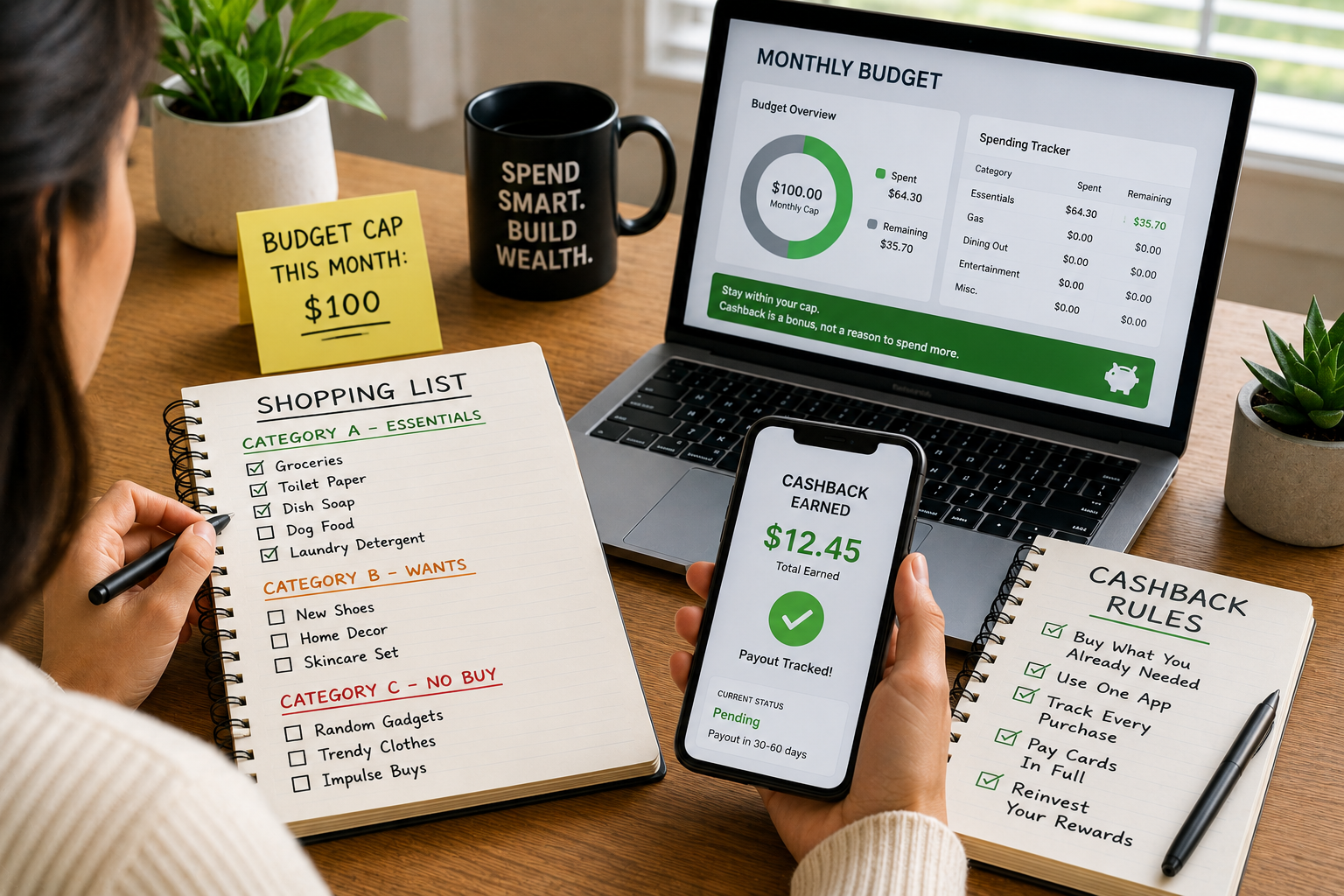
Cashback apps can be amazing.
They can also be the most polite way to trick you into spending more.
Because “earning” $12 back feels good… until you realize you spent $240 to get it.
That’s why this post is not “Here are the best cashback apps.”
This is the True Wealth Moves system for using cashback apps the right way:
- how cashback really works (in plain English)
- the 7 ways people lose money while “saving”
- the rules that make cashback apps actually worth it
- a simple weekly routine so cashback becomes a bonus (not a habit)
- and how to stack cashback with cards WITHOUT turning your budget into a shopping addiction
No hype.
No deal-chasing.
Just a plan.
What cashback apps really are (plain English)
Cashback apps are shopping portals or tracking tools that give you a percentage or fixed reward back when you:
- shop through their link,
- activate an offer,
- upload a receipt,
- or buy from partnered retailers.
But here’s the money truth:
Cashback is a rebate on spending.
It is not a discount on your life.
So the only way cashback apps create savings is if:
you were already going to buy the item anyway.
If cashback makes you buy extra, your “savings” becomes a spending accelerator.
The #1 principle: cashback only works on planned spending
True Wealth Moves rule:
Cashback is allowed only on things you already planned to buy.
That means:
- groceries you already budgeted
- household essentials you already use
- planned replacements (like a printer ink refill)
- gifts you were already buying
- subscriptions you already pay for (if cashback applies)
Cashback is NOT for:
- “I saw a deal so I bought it”
- random impulse purchases
- “I need to hit free shipping”
- “I’ll use it someday”
Because that’s not saving.
That’s spending with a bow on it.
Why cashback apps feel addictive
Cashback apps create a “reward loop”:
- you shop
- you get a little reward
- your brain remembers the reward
- you shop again
This is why people end up with:
- clutter
- extra subscriptions
- purchases they don’t even remember making
- and a budget that feels constantly “tight” even though they’re “saving”
Your job is to break the loop and keep cashback in a controlled lane.
The 7 ways people lose money with cashback apps
Let’s be blunt.
Loss #1: Buying because the cashback rate is high
A “15% cashback deal” is not savings if you didn’t need the item.
Loss #2: Splitting purchases into more orders
People place multiple small orders chasing bonuses, free shipping, or multiple offers.
More orders = more impulse spending + more returns.
Loss #3: Subscriptions you forget
Some cashback offers reward subscription sign-ups.
Then the subscription hits monthly and becomes a quiet fixed-cost leak.
Loss #4: Using cashback as permission to upgrade
“I’ll buy the nicer one because I’m getting cashback.”
That’s how a $40 difference becomes a $240 monthly habit over time.
Loss #5: Not tracking payouts
Cashback often has a delay.
If you don’t track, you’ll assume you got paid when you didn’t.
Loss #6: Paying interest to earn pennies
If you carry credit card debt, cashback becomes pointless.
A 2% reward does not beat 25% APR.
Loss #7: Deal-chasing fatigue
You spend hours hunting deals to save $6.
Time is money too.
True Wealth Moves rule:
If cashback costs you peace, it’s not worth it.
The Smart Rules: how cashback apps become real savings
Here’s the system that works.
Rule 1: Cashback is only for Category A
You should have two categories:
- Category A (Planned Essentials)
- Category B (Wants / Optional)
Cashback apps are allowed only for Category A.
No exceptions.
This single rule eliminates the biggest cashback trap.
Rule 2: You must set a monthly shopping cap
If you don’t have a cap, cashback becomes a reason to shop more.
Set a cap:
- $50/month
- $100/month
- $200/month
Whatever fits your life.
Cashback is a bonus inside your cap, not permission to expand your cap.
Rule 3: One cashback app (not five)
When people use five apps, they lose track of:
- tracking rules
- payout schedules
- which browser extension is active
- and whether cashback actually applied
Use one primary portal/app.
If you want a second, use it only when it clearly beats the first.
Simplicity increases follow-through.
Rule 4: Stack only in the correct order
The correct order is:
1) Your budget + list (control spending)
2) Cashback portal/app (rebate)
3) Credit card reward (only if you pay in full)
4) Store coupons/promos (only if it doesn’t change your cart)
If stacking changes your cart behavior, it’s not stacking.
It’s overspending.
Rule 5: Cashback is not income — it’s a refund
Treat cashback like a rebate you reinvest into your life, not spending money.
Best uses:
- add it to your emergency fund
- use it to reduce next month’s grocery spend
- put it into a sinking fund (car/medical)
- pay down high-interest debt
Worst use:
- “I got $18 back, let me buy something.”
Rule 6: Track every cashback claim until it pays
Cashback doesn’t count until it lands.
Make a simple tracker note:
- date
- store
- purchase amount
- expected cashback
- status: pending / confirmed / paid
This is how you stop losing money to forgotten payouts.
Rule 7: If you carry card debt, pause cashback
Hard truth:
Cashback is not a priority when you have high APR debt.
Because your biggest “cashback” is paying 25% less interest.
Rule:
If you carry balances month-to-month, stop deal-chasing.
Focus on:
- budget stability
- debt payoff
- and a starter buffer
Then return to cashback later.
The table: cashback apps — savings vs trap
Cashback apps table showing what counts as real savings, what becomes a trap, and the smart replacement behavior
| Situation | Looks like savings | Actually becomes a trap when… | True Wealth Moves replacement |
|---|---|---|---|
| High cashback rate | “15% back!” | you buy something you didn’t need | only use for planned essentials |
| Subscription cashback | “$20 bonus!” | you forget the monthly charge | cancel immediately if not essential |
| Stacking offers | “triple rewards” | it expands your cart | stack only after list is finalized |
| Paying with rewards card | “2% back” | you carry a balance | only if you pay in full |
| Multiple apps | “more options” | you lose tracking and payouts | use one main app + simple tracker |
| Deal browsing | “finding deals” | time + impulse spending increase | set a shopping day, not daily scrolling |
Screenshot this table idea. It’s the fastest way to stop getting played.
The “Cashback Day” routine (the simplest system)
Cashback becomes dangerous when it becomes daily.
So you set a routine:
- One day per week (or per pay period) is your shopping day.
- You only buy Category A items that were already planned.
- You activate cashback one time and check out once.
This reduces:
- impulse spending
- scattered purchases
- returns chaos
- and “where did my money go?” moments
How to use cashback apps without overspending
Here’s the exact workflow.
Step 1: Build your list first
Not in the app.
On paper, notes app, or a simple checklist.
Step 2: Set your cart cap
Example: “I’m spending $80 today, total.”
Step 3: Activate cashback only after cart is final
This is where people mess up.
They activate cashback, then browse, then add more.
Rule:
Cashback comes after list discipline.
Step 4: Confirm the cashback tracked
Many apps show “pending” or “confirmed.”
Make sure you see it.
Step 5: Track it until payout
No tracking = no savings.
Track every time.
What categories are best for cashback apps
Cashback works best where you already spend consistently:
- groceries (if eligible)
- household essentials
- personal care items you already use
- pet supplies
- back-to-school essentials
- planned gifts
Cashback is riskier in:
- fashion shopping (high returns + impulse)
- gadgets (upgrade temptation)
- home decor (non-essential spending)
True Wealth Moves rule:
Cashback should help your life, not decorate your dopamine.
How to “make money” with cashback (the honest answer)
Cashback is not really “making money.”
It’s reducing spending.
The only time it behaves like “income” is when you:
- buy things you already planned
- and consistently reinvest cashback into savings/debt payoff
That makes your net worth rise faster.
So the “make money” version is:
cashback funds your buffer automatically.
Example:
You earn $12 cashback this month → it goes into your emergency fund.
After a year, that becomes real margin.
The 3 rules that keep cashback ethical and stress-free
1) Only buy what you already planned
2) Only use a rewards card if you pay it in full
3) Always track until payout
If you do those three, cashback apps become a calm bonus.
Your one evergreen external link (exactly one)
Use this FTC guidance as your single external link for safe online shopping (helps shoppers avoid deceptive tactics and pressure traps):
https://consumer.ftc.gov/articles/how-shop-safely-online
Two True Wealth Moves internal links (exactly two)
https://truewealthmoves.com/wealth-blog/
https://truewealthmoves.com/resources/
Final truth
Cashback apps are not savings if they increase your spending.
But if you:
- use cashback only for planned essentials,
- set a monthly cap,
- stack only after your cart is final,
- pay cards in full,
- and track payouts…
…cashback becomes real savings — and a small wealth accelerator over time.
That’s the True Wealth Moves way: disciplined savings that doesn’t create new spending problems.
Looking for More Finance Topics?
Use the search box below to explore hundreds of articles on True Wealth Moves — we’ve probably already written about what you’re looking for.





