
Instagram / Facebook Affiliate Links: How to Earn Without a Store (and Not Get Played)
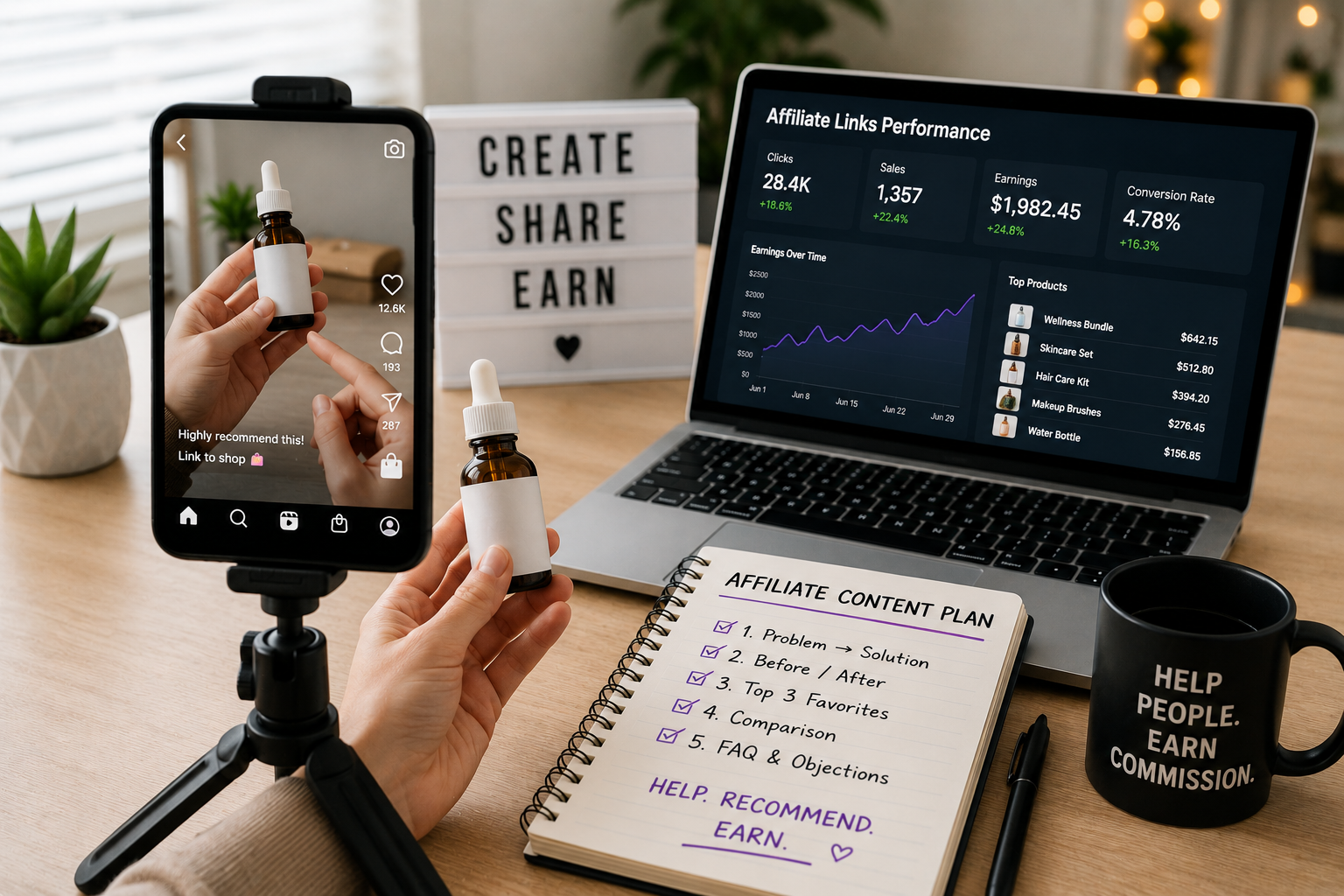
If you’ve ever recommended a product to a friend and thought, “I do this for free all the time,” you’re not wrong.
Meta is leaning hard into affiliate commerce again — and for creators, that can be a real income lane without inventory, without a storefront, and without becoming “salesy”… if you do it with a system.
Here’s the problem:
Affiliate tools can make you money.
But they can also turn into:
- endless content that doesn’t convert,
- audience trust loss,
- or spending more on “content purchases” than you earn.
So this post is the True Wealth Moves guide to Instagram affiliate links and Facebook affiliate partnerships:
- what Meta’s affiliate tools are (plain English)
- how earnings usually work (and what the tracking reality is)
- the trust-first content formats that convert
- the “no-store, no-inventory” affiliate workflow
- the mistakes that get creators ignored, flagged, or burnt out
- and the 30–60–90 day plan to build repeatable affiliate income
No hype.
No scams.
Just a plan you can run.
What Instagram affiliate links are (plain English)
Meta is rolling out ways for creators to tag products and add affiliate shopping links directly into content (especially Reels), so creators can earn commissions when viewers shop through that content.
Think of it like this:
You create a Reel.
You tag products inside it (the product “bubbles” / links).
If people buy, you earn.
Facebook is also pushing “affiliate partnerships” that let creators promote products from affiliate partners and earn money.
So yes — the platforms are building the affiliate layer into the content itself.
Why this matters right now
Two reasons:
1) Meta is making affiliate easier than third-party linking.
Instead of relying only on external affiliate platforms, creators can tag products in-platform, which reduces friction and can increase conversions.
2) People already shop from Reels and posts.
Meta is trying to keep that shopping behavior inside Meta — and pay (or enable pay) creators to drive it.
But here’s the True Wealth Moves warning:
More commerce tools = more temptation to spam.
The winners won’t be the loudest.
The winners will be the most trusted.
The #1 mindset shift: affiliate is not “content.” It’s a conversion system
Most creators fail because they do this:
- post random product links
- hope people buy
- repeat
A real Instagram affiliate links strategy has four parts:
1) Audience problem
2) Product solution
3) Proof (demo, result, comparison)
4) Clear call-to-action (tagged products + why it’s worth it)
Affiliate is sales — but it’s trust-based sales.
Eligibility and “who can do this”
Eligibility can vary by region, account type, and rollout stage.
Recent reporting and Meta/creator communications indicate Meta is expanding affiliate tools again and enabling creators to add affiliate links and product tags in Reels.
True Wealth Moves rule:
Don’t assume you’re ineligible because of a rumor.
Check your Professional Dashboard / monetization tools and follow onboarding prompts if the feature appears.
How commissions work (the truth people need)
Affiliate commissions are usually paid when a purchase is tracked back to your content link/tag.
That means your income depends on:
- clicks
- conversion rate (how many buyers per click)
- price of product
- commission rate
- return/cancel rate
So you don’t need “more followers.”
You need:
- higher intent viewers
- better product fit
- and clearer proof
If your content gets views but no clicks, your problem is usually:
- unclear benefit
- weak demonstration
- wrong audience
- or audience trust issues
The trust problem (and why creators are cautious)
There’s also been creator frustration about Meta experimenting with shopping links and affiliate-like features in ways that didn’t always credit creators the way they expected.
True Wealth Moves takeaway:
Your biggest asset is trust + control.
So your affiliate strategy should focus on:
- products you personally use or can genuinely vet
- transparent “why I recommend this”
- and not tagging random lookalikes you don’t stand behind
The 6 affiliate content formats that actually convert
These formats work because they match how people buy: they need proof and clarity fast.
1) Problem → Fix (best beginner format)
Hook (0–2 seconds): show the problem.
Middle: show product solving it.
End: show result + tag product.
Example:
“My cables used to look like THIS… now look.”
2) Before/After
Works for:
- organization
- cleaning
- home upgrades
- beauty basics
3) 3-item shortlist
“3 things under $25 that made my mornings easier.”
Then tag all 3.
Meta’s new Reels affiliate approach reportedly allows creators to tag many products in one Reel (up to 30 in some rollouts).
4) Comparison (cheap vs better)
This is a trust-builder because you’re not pretending everything is perfect.
5) “What I’d buy again”
Repeat purchase = credibility.
6) FAQ / objection handling
“Is it actually worth it?”
“Does it last?”
“Who should NOT buy it?”
This is where conversions often happen because you’re reducing buyer anxiety.
The 5 product rules that stop you from becoming spam
If you follow these, your affiliate income becomes more stable.
Rule 1: Promote products that solve the same type of problem repeatedly
Pick one lane:
- kitchen tools
- home organization
- skincare basics
- budget tech accessories
- baby essentials
- work-from-home productivity
Consistency builds audience expectation and trust.
Rule 2: No medical promises, no “guaranteed results”
If your content becomes “claims,” you’ll lose trust and possibly get flagged.
Rule 3: Never tag products you wouldn’t buy yourself
Affiliate links are reputation links.
Rule 4: Favor low-regret products first
Under $30–$60 tends to convert better for beginners because it’s easier to say yes.
Rule 5: Use a “two-post test”
Promote a product twice.
If it gets clicks but no sales, it might be the product or your proof.
If it gets nothing twice, move on.
The “No-Store Affiliate Workflow”
Here’s the simple workflow you can repeat every week.
Step 1: Pick a category lane
Example: “home organization.”
Step 2: Build a 10-product list
Only products you can demonstrate.
Step 3: Create a 5-post weekly schedule
- 3 demos
- 1 comparison
- 1 shortlist
Step 4: Track only 3 metrics (or you’ll drown)
- clicks
- sales
- earnings per post
Step 5: Double down on winners
Most creators waste time posting new products daily instead of repeating what works.
Winners repeat:
- the best product
- with new hooks
- and new angles
The table: Instagram affiliate links growth plan
Instagram affiliate links growth plan table showing what to do in 30, 60, and 90 days to build repeatable commissions
| Timeframe | Goal | What you post | What you measure | Common mistake |
|---|---|---|---|---|
| Days 1–30 | Build consistency + pick a lane | 20–30 posts in one lane | clicks + saves | switching niches weekly |
| Days 31–60 | Improve conversion + trust | FAQs, comparisons, before/after | sales per product | tagging random items |
| Days 61–90 | Build repeatable revenue | series + repeat winners | earnings per post | relying on one viral hit |
| Ongoing | Protect account health | compliant, honest content | takedowns/flags | risky claims, misleading tags |
How to make this feel natural (not salesy)
The best affiliate creators don’t “sell.”
They document.
Your tone:
- “Here’s what I use.”
- “Here’s what I tried.”
- “Here’s what I’d buy again.”
- “Here’s what I’d skip.”
That tone preserves trust and still converts.
Money rules so you don’t earn $200 and spend $300
Affiliate income can trick people into becoming “content consumers.”
True Wealth Moves rules:
- 50% of affiliate earnings goes into a savings/tax buffer
- 30% goes into content tools (only if needed)
- 20% is optional reward
And:
No credit cards for “content purchases.”
That turns affiliate into gambling.
What to do if you’re not eligible yet
If you don’t see affiliate tools yet:
- Start building the content lane anyway.
- Build proof: posts with strong saves and comments.
- Get your account clean: no policy violations.
- Prepare your “product library” so you can launch fast when tools appear.
Being ready beats being early.
Your one evergreen external link
Use Meta’s official Business Help page on affiliate partnerships as the single external link for this post:
https://www.facebook.com/business/help/748831780828831
Two True Wealth Moves internal links (exactly two)
https://truewealthmoves.com/wealth-blog/
https://truewealthmoves.com/resources/
Final truth
Instagram affiliate links and Facebook affiliate partnerships can be a real income lane — but only if you treat it like a trust-based system:
- one lane
- demonstrable products
- repeatable formats
- simple tracking
- and strong money rules
If you do that, you don’t need millions of followers.
You need consistency and proof.
That’s how you earn commissions without inventory and without becoming spam.
Looking for More Finance Topics?
Use the search box below to explore hundreds of articles on True Wealth Moves — we’ve probably already written about what you’re looking for.





